Faith beside faith
Religions and coexistence
Islam, Christianity and Judaism — and the ancient heritage of fire — have been neighbours on one land for centuries.
Faith beside faith
Islam, Christianity and Judaism — and the ancient heritage of fire — have been neighbours on one land for centuries.
Religions
The overwhelming majority of the faithful are Muslims, and Azerbaijan is characterised by the coexistence of two branches of Islam: Shia (predominant) and Sunni (widespread among the peoples of the north). The institutional boundary between them is weak — shared mosques and common prayer are not uncommon.
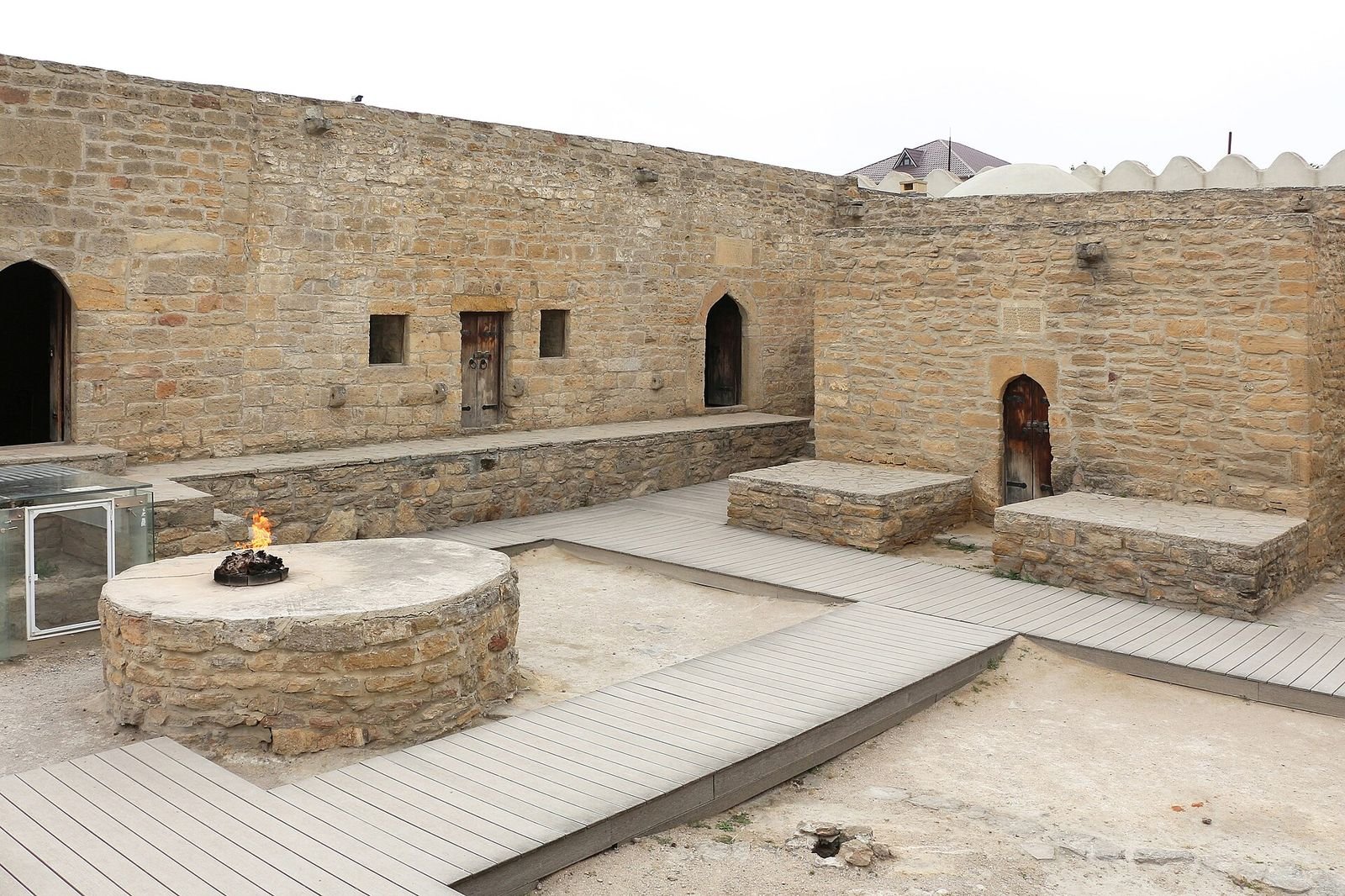
Christianity is represented by Russian Orthodoxy, the revived Albanian-Udi Church (officially restored as a community in 2003), a small Catholic parish and Protestant congregations. Judaism is represented by three Jewish communities. There are also Baha'i communities, and the Ateshgah fire temple recalls the pre-Islamic cult of the unquenchable flame.
Religions
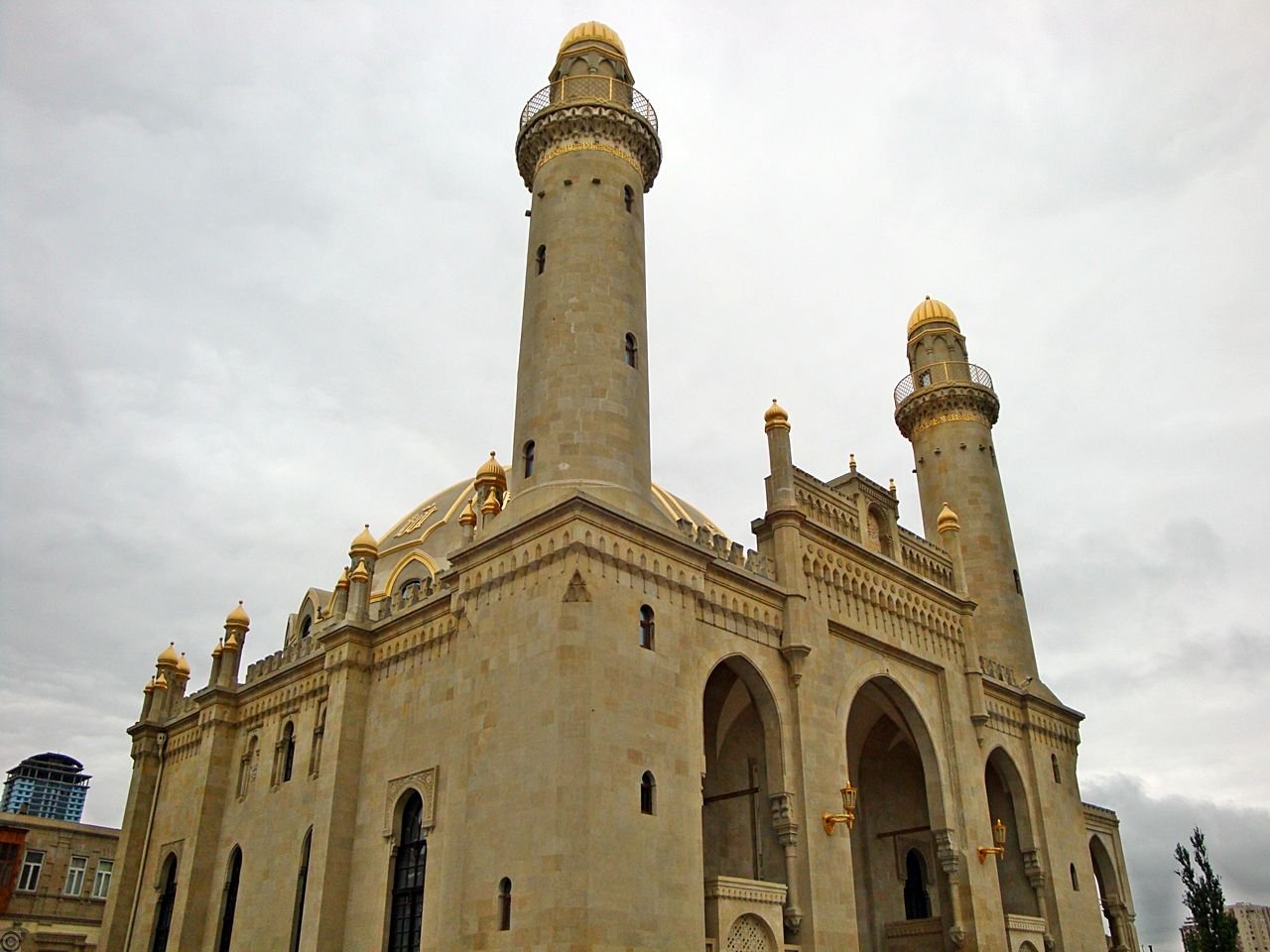
Shia and Sunni side by side; the main mosque is Tezepir in Baku, the seat of the Caucasus Muslims Office.
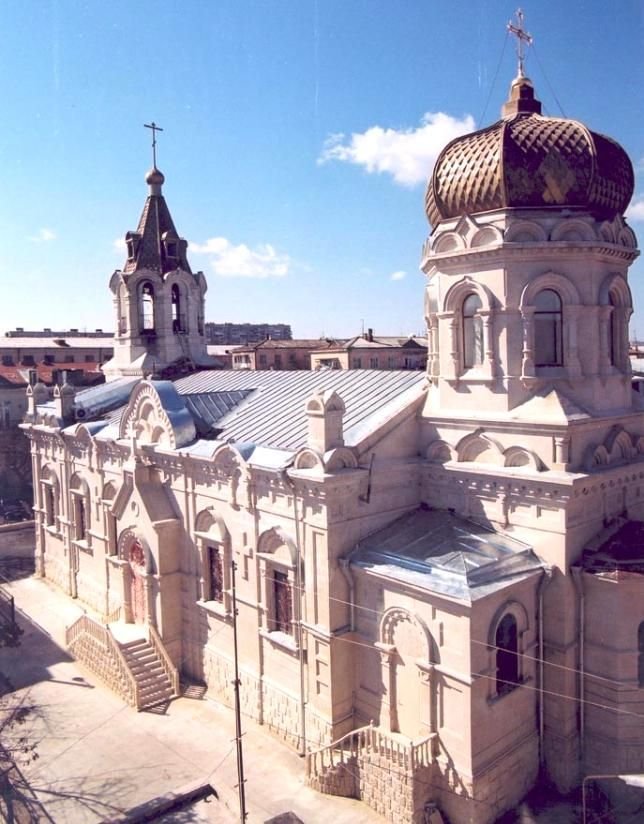
Russian Orthodoxy, the Albanian-Udi Church (the heritage of Caucasian Albania), Catholics and Protestants.
Mountain, Ashkenazi and Georgian Jews; active synagogues in Baku and Krasnaya Sloboda.
Religions
The claim of mosques, churches and synagogues being neighbours for centuries has visible confirmation: in the centre of Baku, places of worship of different religions stand within walking distance of each other; in Krasnaya Sloboda the synagogues neighbour Muslim Quba across the river; in the village of Nij a Christian church is surrounded by Muslim villages.
An honest caveat: the claim of a "complete absence of conflicts" is part of the official narrative. The Armenian-Azerbaijani conflict is ethnopolitical rather than religious in nature, but it affects inter-community relations; it is more correct not to pass over this subject in silence.